A bathroom renovation runs into five figures and takes weeks. Yet most of what makes a bathroom feel dated is not the tiling. It is three things: a worn basin, bad lighting, and things having nowhere to live.
All three can be fixed without anyone demolishing anything. Here is what to do first, in what order, and what to measure before you order.
1. The basin is the first thing anyone looks at
A countertop basin is the cheapest way to change the character of a bathroom completely. It sits on the existing surface, so plumbing work is limited to the tap and the drain — no tiling, no new cabinetry.
Measure two things before ordering:
- Counter depth. A round basin needs the same clearance in every direction. On a narrow counter an oval often sits better, because you can turn it along the counter and leave more room in front of the tap.
- Tap height. This is the one people forget. A countertop basin raises the water level by 10–15 cm, which can leave an existing tap sitting too low. Check the spout height against the basin rim before you buy.
Material affects upkeep more than looks. Ceramic is smooth, cheap to clean and handles limescale well. Natural stone looks more striking, but it is more porous and needs occasional sealing — and because every stone is different, the dimensions vary from piece to piece.
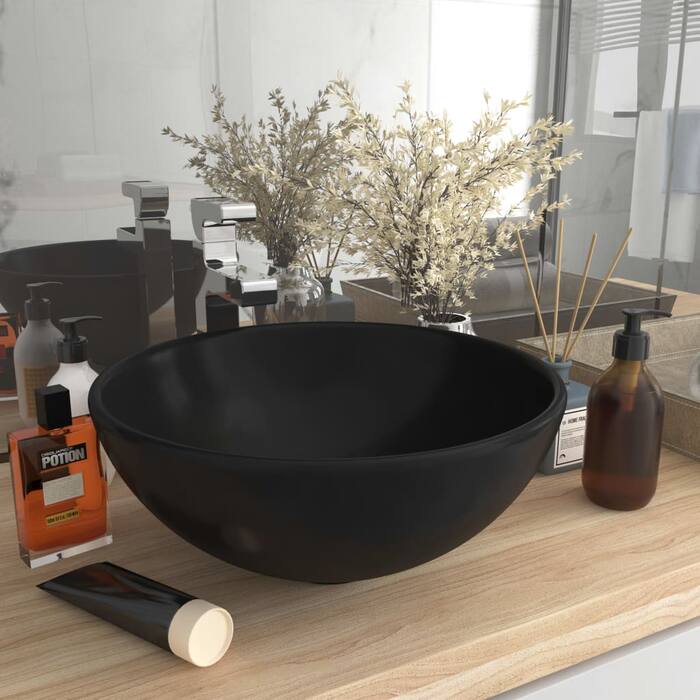 From the catalogue
Luxury bathroom basin, round 32.5x14 cm, ceramic
See price at the shop
From the catalogue
Luxury bathroom basin, round 32.5x14 cm, ceramic
See price at the shop
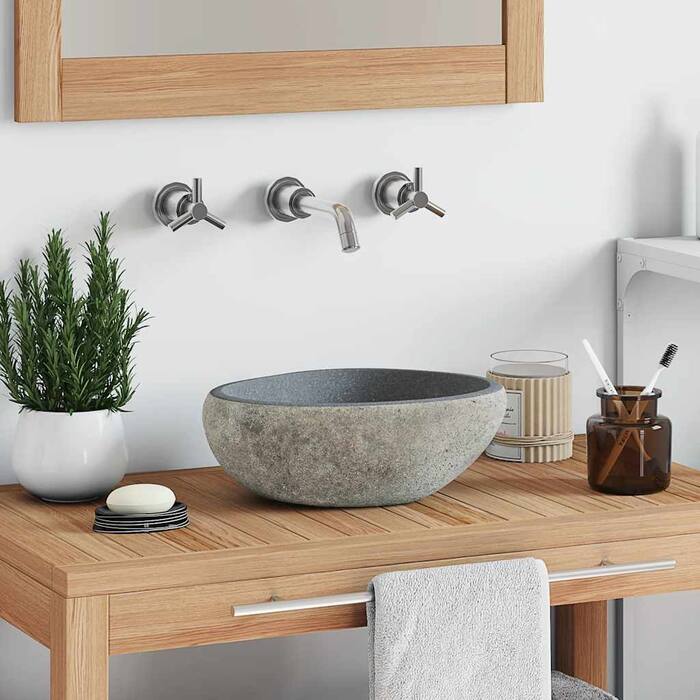 From the catalogue
Basin in river stone, oval (29-38)x(24-31) cm
See price at the shop
From the catalogue
Basin in river stone, oval (29-38)x(24-31) cm
See price at the shop
2. Lighting matters more than anyone expects
Most bathrooms have a single ceiling light. It comes straight down, which means your face is in shadow at exactly the moment you are looking at it in the mirror. This is not a matter of taste but of physics: light from above casts shadows into the eye sockets and under the chin.
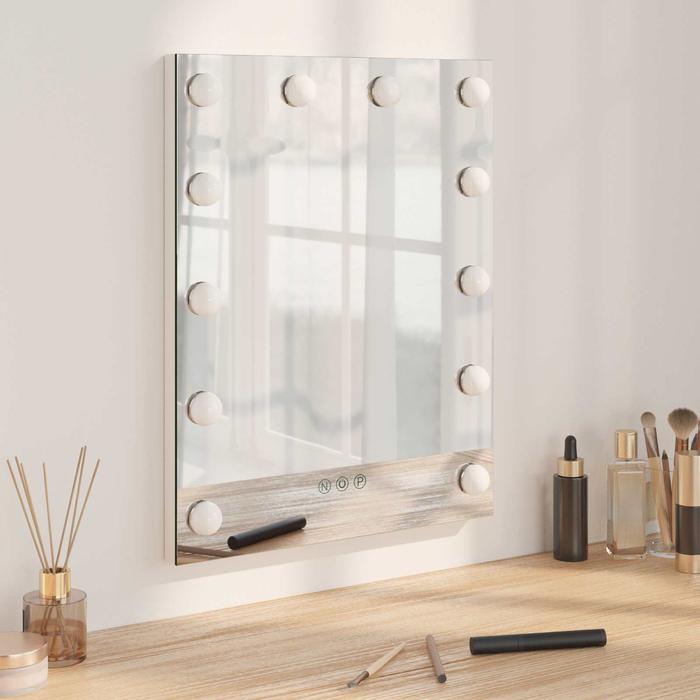
The fix is light arriving from the side, at face height. A lit vanity mirror does exactly this, which is why they are standard equipment in salons and theatre dressing rooms.
If you buy one, look at three things:
- Adjustable colour temperature. Warm light is pleasant, but makeup shades only read correctly under neutral light. Three modes (cool, natural, warm) cover the situations that matter.
- Dimming. The same light that works in the morning is blinding at night.
- Placement. A tabletop model needs no electrical work; a wall-mounted one needs a socket in the right place.
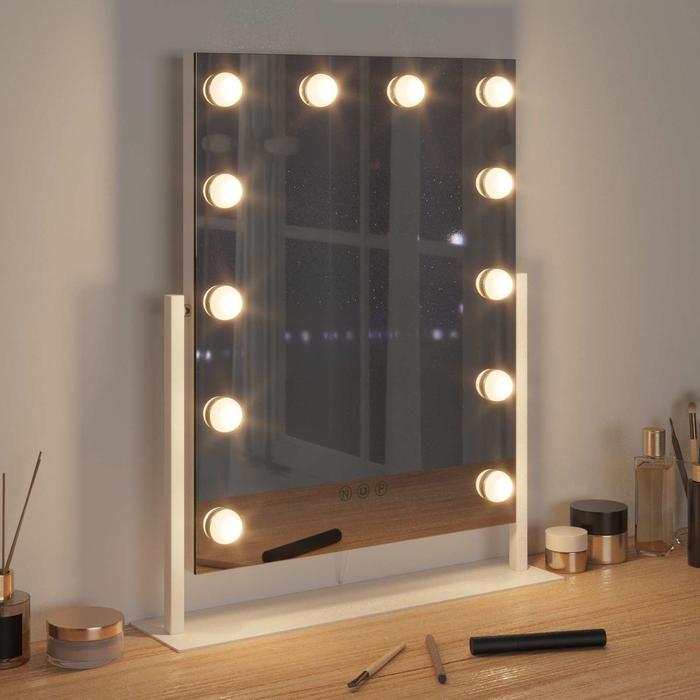 From the catalogue
LED vanity mirror, white, 44x10x53 cm
See price at the shop
From the catalogue
LED vanity mirror, white, 44x10x53 cm
See price at the shop
3. Storage: the problem is vertical
In a small bathroom there is no floor space, but there is almost always unused wall and cabinet height. The common mistake is buying more baskets for the floor, which narrows the room further.
What actually works is the same as in a kitchen: use the internal height of the cabinet with tiered racks, and move daily items to arm's reach with everything else stored higher. A multi-tier wire rack inside a cabinet doubles the usable surface without drilling anything into the wall.
If you only do one thing
Start with lighting. It is the cheapest, needs the least work, and changes the most about how the room feels in daily use.
The basin is the second most dramatic, but it needs measuring and possibly a new tap — allow more time for it than you think.
What to skip
A few things that get sold heavily but rarely earn their place in a small bathroom:
- Large floor cabinets. They consume exactly the space you need to stand in.
- Dark tones on every surface. One dark element works; a whole room does not — without a window the space feels tighter than it is.
- Extra textiles. In a humid room, every mat and curtain is one more thing that has to be washed.
The three changes above come to under 300 euros in total and can be done over a weekend without a professional. It is not a renovation, but the difference is bigger than the sum suggests.
NORDFIND does not sell products. We point you to the shop that does, and we may earn a commission on a purchase. Prices and availability should be checked on the shop's own page — they can change.