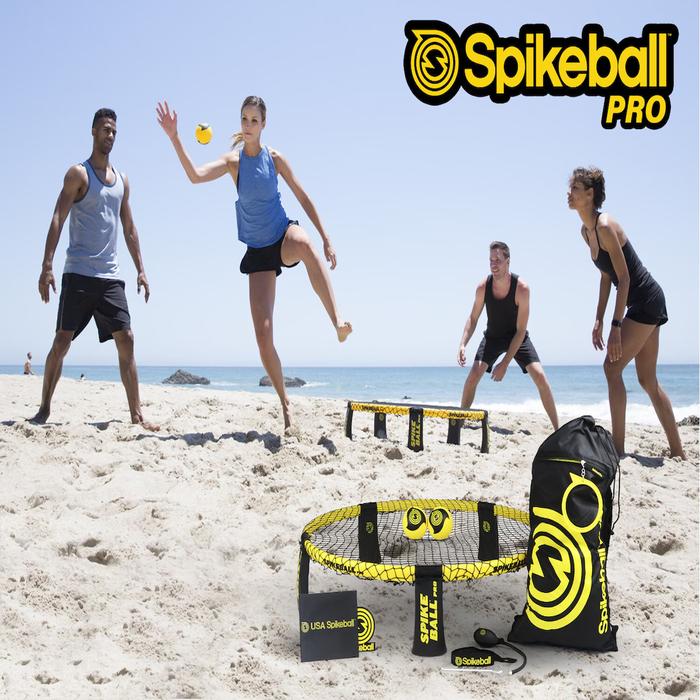
Every garden has the one game everybody already owns, and by the tenth outing it has become a way to stand on the grass holding a drink. If you want something to actually happen at a garden party, pick a game that makes people move.
Below are four options with very different profiles. The deciding factor is not price but how many players the game supports and how much space it needs.
Fastest and most physical: Spikeball
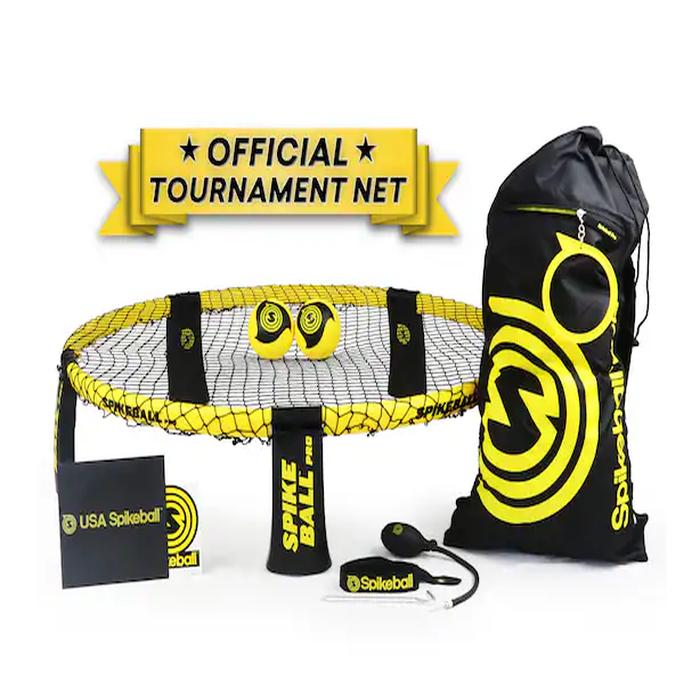
A four-player game where the ball is spiked into a small net at ground level and bounces to the opposing side. Explaining the rules takes two minutes.
Three things to know before buying:
- It is genuinely strenuous. This is not a game you play after dinner holding a plate. It is closer to beach volleyball than to lawn bowls.
- Four players at a time. At a party of twenty that means taking turns, which works well as a tournament and badly if everyone should be involved at once.
- Pro and standard versions differ. The Pro net is tighter and the ball matches official tournament spec, making play faster. For beginners the standard version is actually more forgiving.
The surface matters: grass and sand work, asphalt does not — diving is part of the game.
From the catalogue Spikeball Pro game set See price at the shopCheapest and funniest: reaction ball
A soft ball on an elastic cord attached to a headband. The idea is simple: hit the ball as it comes back. In practice it is a ten-euro object that generates more laughter than anything else on this list.
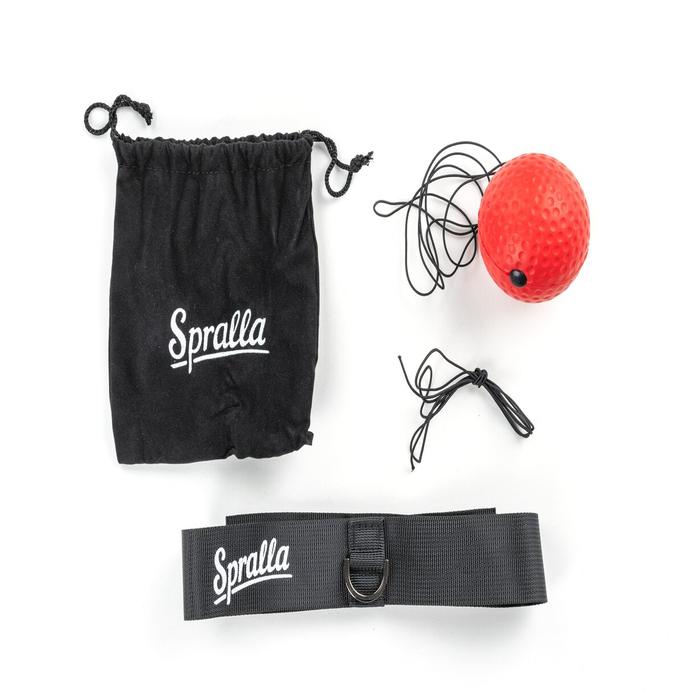
This is not the game that carries a whole party. It is the one somebody pulls out and a circle forms around to watch. It works particularly well because everyone is equally bad at it for the first few attempts.
From the catalogue Spralla Target Ball See price at the shopMost players at once: a wall-mounted hoop
A wall-mounted basketball hoop is a different category from the actual garden games, because it is permanent. It needs nobody to start a game and no rules explained — people take shots as they walk past, and a game forms by itself.
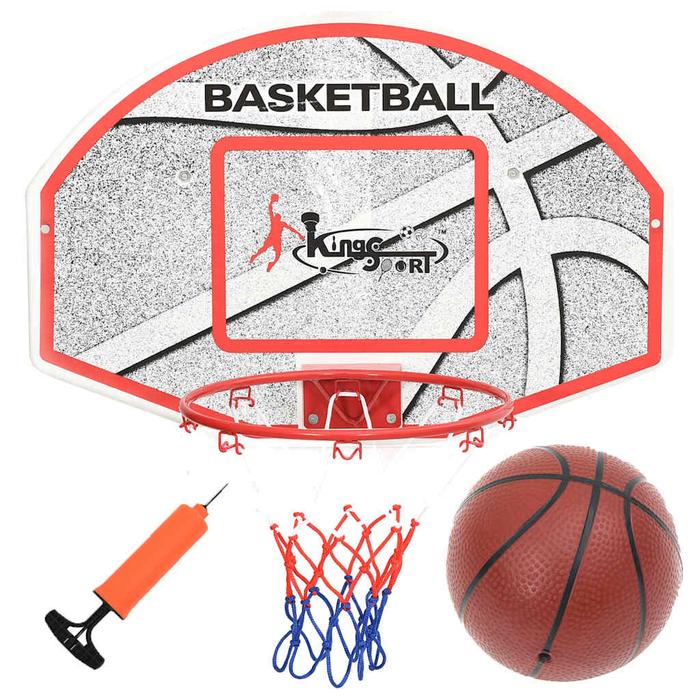
At larger gatherings this has the best return: buy it once, no assembly each time, and it also covers the children who need something to do.
Check the mounting surface before buying. Fixing to a wooden wall is straightforward, brick needs the right anchors, and a sheet-metal wall should not be used at all.
From the catalogue
Wall-mounted basketball backboard set, 5 pieces
See price at the shop
Calmest and most surprising: archery
This one needs the most thought and the most space, but it is also the one guests remember. Archery is slow, focused and naturally takes turns — it works in exactly the opposite way to Spikeball.
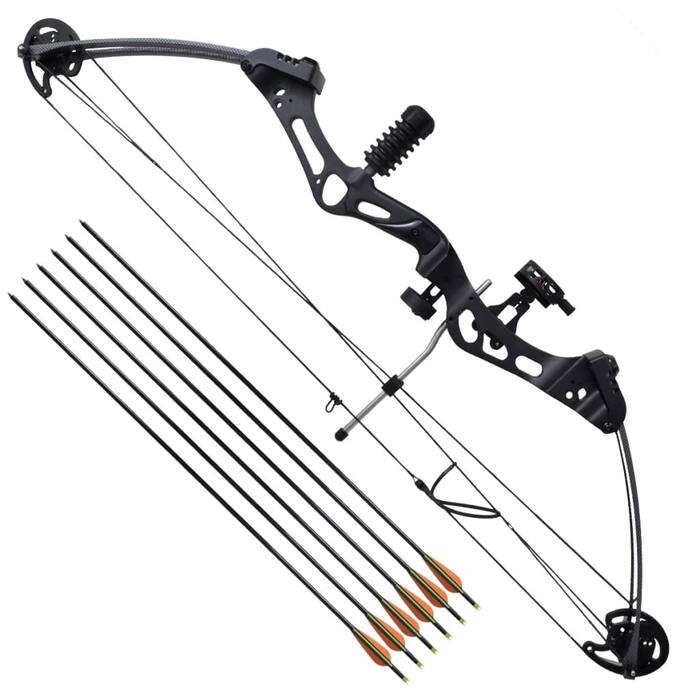
Safety here is not a formality but the precondition for the whole thing:
- The backstop must be solid. An earth bank, a dense hedge or a building wall behind the target. Never an open field or the direction of a neighbour.
- Keep the shooting line away from the rest of the party. No walking route, no grill and no children's play area on that side of the garden.
- Alcohol and bows do not mix. This is why the bow should come out during the day and be put away before the evening progresses.
- Draw weight decides who the bow suits. An adult bow is too heavy for most guests on a first attempt, so nothing hits the target and interest evaporates.
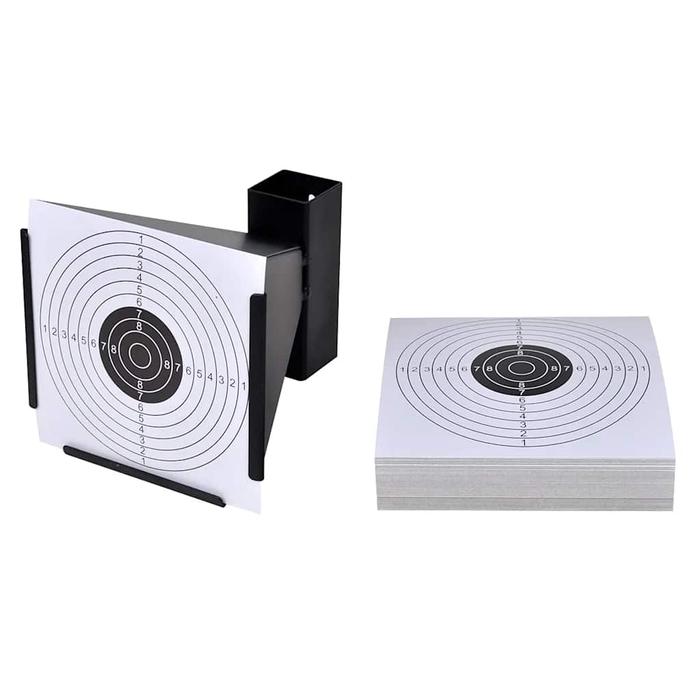
Buy a proper target holder at the same time. A funnel-style trap collects the projectiles itself and reduces ricochets, which is both a tidiness and a safety matter.
From the catalogue
Adult compound bow with accessories and fiberglass arrows
See price at the shop
 From the catalogue
Funnel target holder + 100 paper targets
See price at the shop
From the catalogue
Funnel target holder + 100 paper targets
See price at the shop
Choosing by the group
Under 10 people, an active crowd → Spikeball. Everyone gets to play with reasonable rotation.
Over 10 people, or mixed ages → the hoop and the reaction ball. No turns, no rules, no barrier to starting.
A small garden → the reaction ball is the only one that works in under ten square metres.
The one thing that ruins a garden game
The most common mistake is not choosing the wrong game but the timing. The game comes out too late, once everyone has eaten, sat down and settled into conversation. At that point it requires people to get up from the table, and nobody wants to be the one who interrupts.
The order that works is the reverse: set the game up before the food is ready. Guests arrive at different times, the first ones have nothing to do, and the game gives them something. By the time the food is served, the mood is already going.
NORDFIND does not sell products. We point you to the shop that does, and we may earn a commission on a purchase. Prices and availability should be checked on the shop's own page — they can change.